Surname
Check spelling variants, then a clan and sept list, and confirm with records where your family lived.
Find your Scottish clan
Scottish clans, surnames and family roots
An independent guide to what a Scottish clan was, how to find a clan from a surname, what tartan and crest really mean and how to trace Scottish ancestors in the records.
A Scottish clan is a kin-based group with a chief and a territory. The word comes from Scottish Gaelic clann, meaning "children" and more widely "kindred".
A clan gathered around a ruling family. The chief led and held the land, chieftains headed branches, and tenants, tradesmen and allied families formed the rest. The system was strongest in the Highlands and Islands and ran until the eighteenth and nineteenth centuries, when the chiefs lost their courts in 1746 and later became owners of commercial estates. Today a clan is a cultural and genealogical identity.
A surname may link to one or more clans or septs, and a sept is a family associated with a clan as the chief decides. There is no official list, and the same name can belong under several clans. Clan membership is therefore not proven by a surname alone, which is why records matter. The Court of the Lord Lyon describes a clansman as someone who professes allegiance to the chief and wishes to show an association with the clan.
No agreed list exists. Kindreds with a documented early founder, such as the descendants of Somerled, are often counted among the oldest, but claims to be the oldest are contested. The clan history timeline sets out what the sources support.
There is no objective answer, because fame depends on the measure. Names such as MacDonald and Campbell are among the most common Scottish surnames in the National Records of Scotland figures, but a common surname is not the same as a famous clan.
Clan Donald, which descends from the twelfth century figure Somerled, is a frequently cited example because its founder is named in the sources. Treat any claim of a single oldest clan with caution.
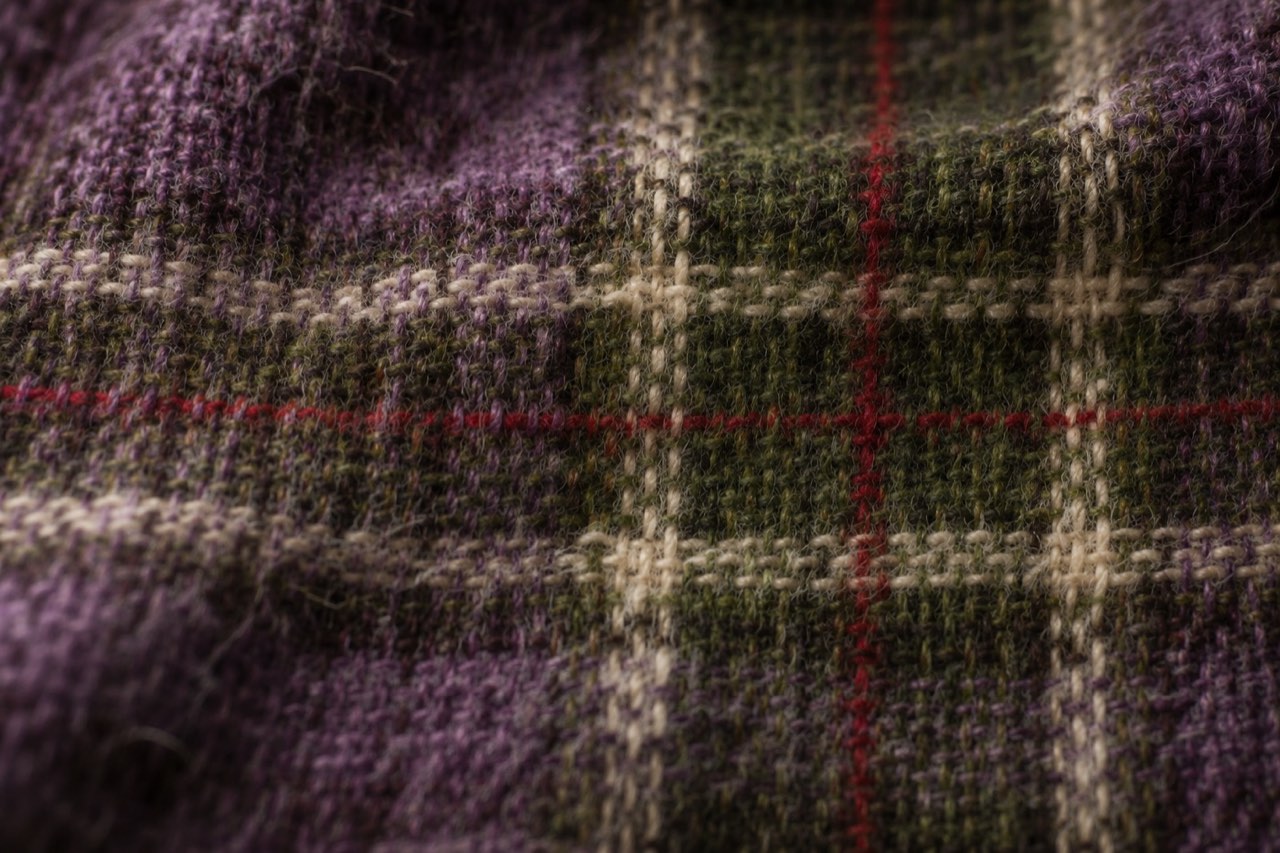
The idea behind the pattern
In weaving, the warp threads run the length of the cloth and hold everything else. In a clan the equivalent frame was the chief, the kin line and the land. These are the threads that run through the history of the clans from the twelfth century to 1746.
The weft threads cross the warp. Tenants, septs, allied families and migrants crossed the clan frame in every generation. Their paths are what your surname and your records describe, and they rarely follow a single line.
Where warp and weft cross at right angles, colours blend and a repeating pattern, the sett, appears. The Scottish Register of Tartans uses this definition. Clan history and family records form your own pattern only when both sets of threads are traced and checked.
Two changes shaped how families still talk about clans: the end of the old order after 1746, and the movement of people that followed. The line below is drawn as you scroll, one date at a time.
The Norse-Gaelic warlord who seized the Isles from 1135 leaves a realm whose lines include Clan Donald and Clan MacDougall.
James IV takes the lands and titles of the last lord, John MacDonald, ending a semi-independent western power.
Chiefs are required to live in Edinburgh for much of the year and to educate their heirs in the Lowlands.
On 13 February soldiers of Argyll's Regiment kill members of the MacDonalds of Glencoe.
On 16 April the Jacobite army is beaten; the same year chiefs lose their courts and Highland dress is restricted until 1782.
From 1 January births, marriages and deaths are recorded in a standard format, the base of most family research.
Crofters gain security of tenure, generally seen as the end of the Highland Clearances.
The Scottish Parliament creates one public register of tartans, run by the National Records of Scotland.
Clans grew from Gaelic, Norse-Gaelic, Norman and British kindreds. Somerled, a twelfth century Norse-Gaelic warlord, is the founder of the line of Clan Donald and Clan MacDougall, and the MacLeods trace a Norse-Gaelic ancestor of the thirteenth century. The full story is on the clan history timeline.
The Highland Clearances took place mostly between about 1750 and 1860. Tenants were relocated and then expelled so that land could carry sheep, and the Potato Famine of 1846 to 1855 brought the process to a climax. Families went to the coast, the Lowlands, Canada, the Carolinas and Australia. See Highland Clearances and family history.
Start with the surname, learn the symbols, and then let the records decide. Each step below has its own guide. If you are ready for family research, begin with tracing Scottish ancestors and keep a note of every source.
Check spelling variants, then a clan and sept list, and confirm with records where your family lived.
Find your Scottish clanLearn what a sett, a crest badge and a motto mean and how to look a pattern up without being misled.
Tartan, crest and mottoStatutory registers, census returns, old parish registers and wills, with a plain method for searching.
Trace Scottish ancestorsIf your family left the Highlands, the Clearances explain many missing records and many emigrant lines.
Highland Clearances and family history